Web data extraction is a powerful tool for gathering information from around the web. It can help organizations gain competitive and market intelligence, keep abreast of changes to regulation and compliance terms, or simply stay up-to-date with developments in their industry.In terms of content accessibility, the web can be divided into three layers: surface web, deep web, and dark web.The surface web is the top layer and includes content that is readily accessible (index-able) using search engines. The deep web is a layer below, it’s not indexed by search engines and accessing it often requires filling out forms to secure specific content, searching a database, or logging into a specific set of content pages. Finally, at the bottom layer is the dark web, which is accessible only with special software and often used for niche purposes sometimes criminal, requiring the highest level of encryption and anonymity.
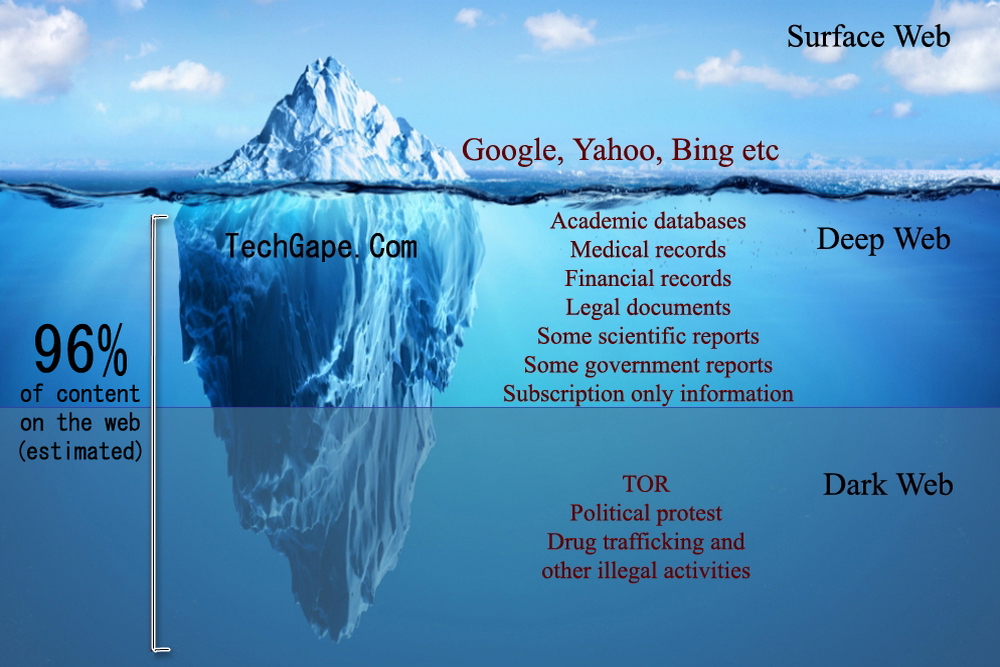
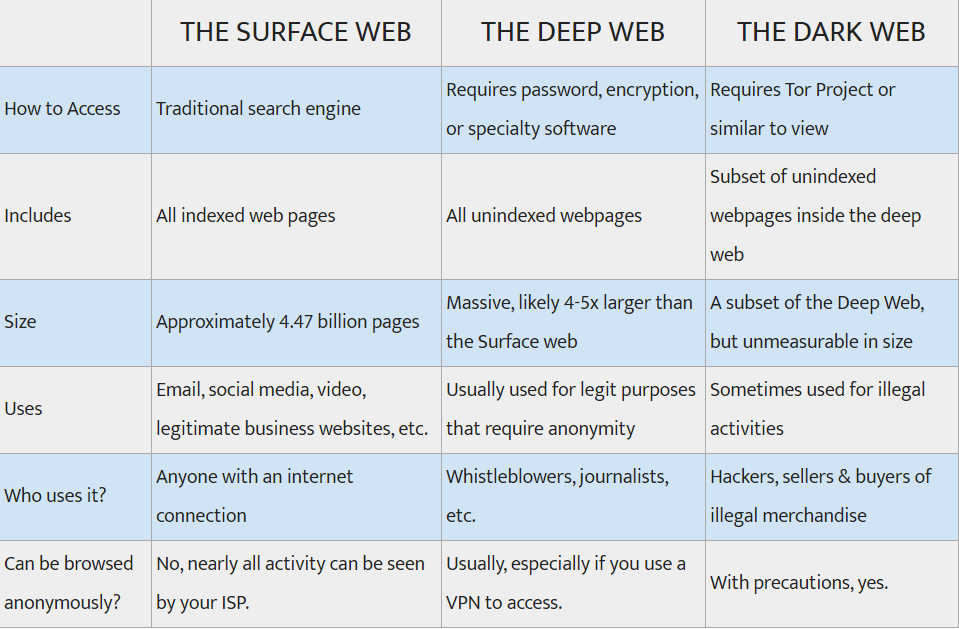
In layman’s terms, the Deep Web is just another ‘level’ of the internet. Residing below the “surface,” it is the deepest level of the internet. What’s on the dark web ?
- The internal sites of major companies, associations, and trade organizations
- The school, college, and university intranet systems
- Access to online databases
- Password-protected websites with members-only access
- Paywall enshrouded pages
- Timed access pages such as those found on online test-taking sites (editch)
- Circumventing paywalls for blocked digital content
- An individual’s personal account for social media, email, banking, and more.
Journalist, Political Protesters, Residents of Oppressive Political Regimes, A whistleblowers (person who exposes secretive information or activity that is deemed illegal, unethical, or not correct within a private or public organization.Because of this, a number of laws exist to protect whistleblowers ) are the people who are primarily benefited by the deep web. But the most encrypted part of the web is dark web, it is restricted from the traditional web search engines.

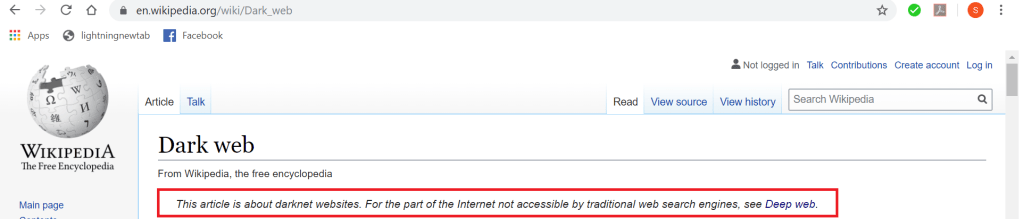
Known throughout the world as the Dark Net/the Dark Internet/the Dark Web, this corner of the internet lies within the deepest points of the internet.Accessing the Dark Web requires a certain degree of savvy internet skill, with a required list of steps that must be taken to not only enter this enshrouded world while maintaining the utmost privacy.The dark-net encryption technology routes users’ data through a large number of intermediate servers, which protects the users’ identity and guarantees anonymity. The transmitted information can be encrypted again. The complicated system makes it almost impossible to reproduce the decrypt the information layer by layer.Due to the high level of encryption, websites are not able to track geolocation and IP of their users, and users are not able to get this information about the host. Thus, communication between darknet users is highly encrypted allowing users to talk, blog, and share files confidentially.
Ross William Ulbricht (born March 27, 1984) is an American convict best known for creating and operating the darknet market website Silk Road from 2011 until his arrest in 2013. The website was designed to use Tor for anonymity and bitcoin as a currency.
https://en.wikipedia.org/wiki/Ross_Ulbricht – Founder of DarkWeb
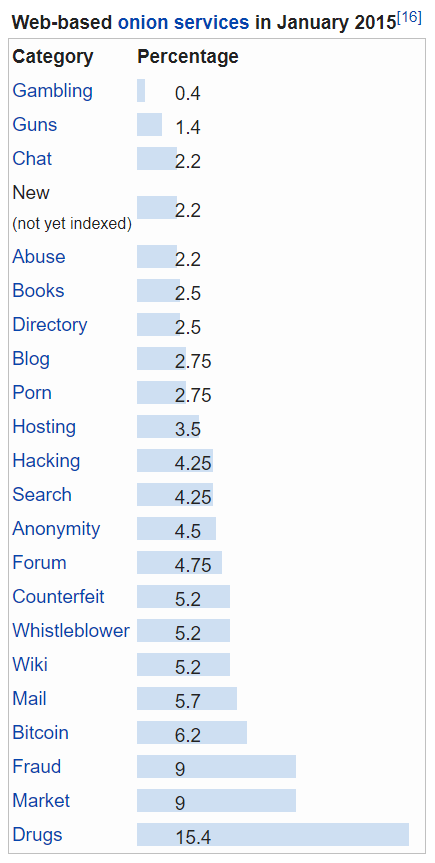
Accessing the dark web requires the use of an anonymizing browser called Tor. The Tor browser (free open source software initially released on 20th September 2002) routes your web page requests through a series of proxy servers operated by thousands of volunteers around the globe, rendering your IP address unidentifiable and untraceable. Tor works like magic, but the result is an experience that’s like the dark web itself- unpredictable, unreliable and maddeningly slow.
https://en.wikipedia.org/wiki/Tor_(anonymity_network) – About Tor software
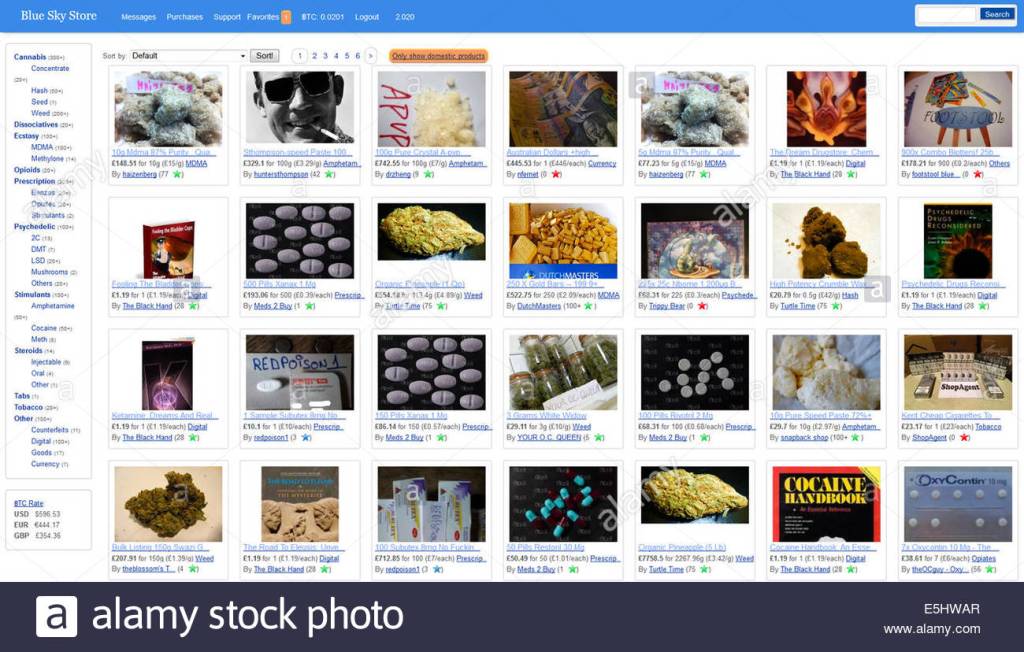
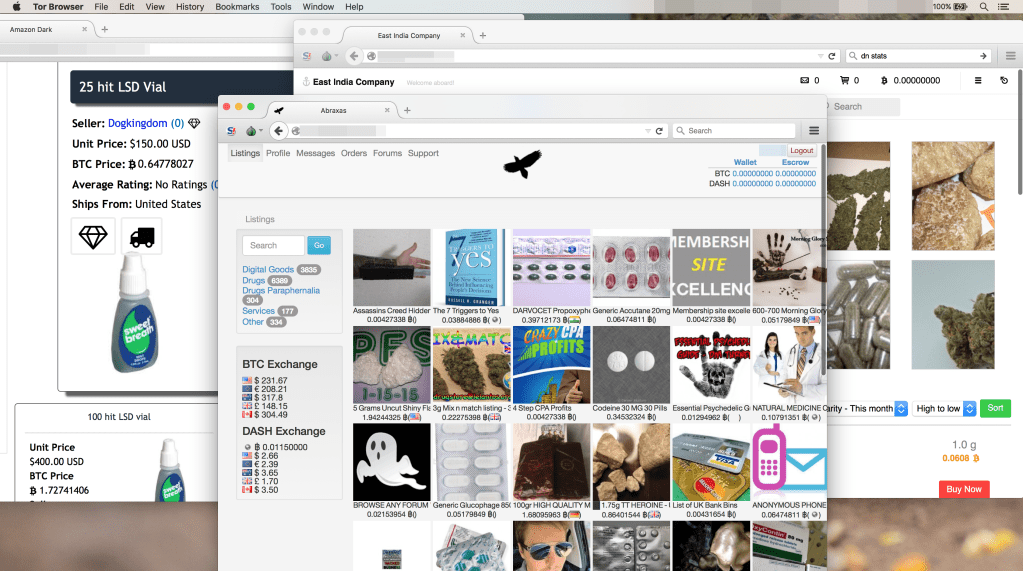
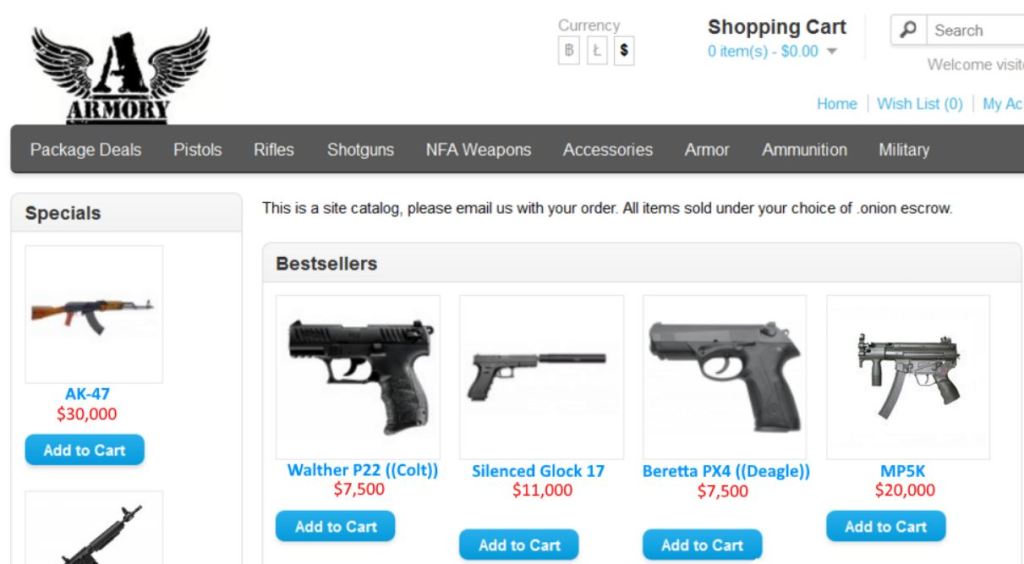
Commerce on the dark web
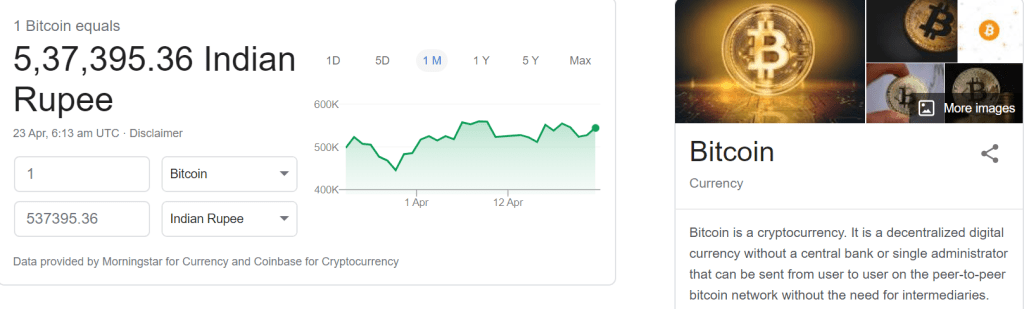
The dark web has flourished thanks to bitcoins, the crypto-currency that enables two parties to conduct a trusted transaction without knowing each other’s identity.
The pairing of dark web services with cryptocurrencies has led to expectations of a boom in crime. A decade ago, an unknown cryptography expert (with particular expertise in cracking passwords) who used the alias Satoshi Nakamoto developed the world’s first currency and payment network not controlled by a national government-Bitcoin. Originally a niche medium of exchange for the technology community, Bitcoin emerged in 2011 as the currency of choice for drug dealers conducting transactions on a dark-web site.Bitcoin transactions on the dark web grew from approximately $250 million in 2012 to $872 million in 2018.
The Federal Bureau of Investigation has started to seize the dark web index and news site Deep Dot Web, according to a warning notice posted on the sit. The site’s dark web site has also been taken down and replaced with a similar notice.Criminals are going to have a tougher time using the dark web for illegal activity. Authoritarian regimes will continue efforts to block access to the dark web and the threats to legitimacy that it poses by enabling dissidents and activists. Faced with this threat, the natural reflex of liberal civil societies will be to advocate that Tor remain unmonitored and unpoliced to protect free expression and privacy. The reality of the dark web is much more complicated, requiring a nuanced approach from supervisors and law enforcement agencies to thwart activities that are considered illegal and immoral in free societies, all the while protecting the very real benefits of an anonymized network.
https://en.wikipedia.org/wiki/Dark_web – Dark web
https://en.wikipedia.org/wiki/Deep_web – Deep web











 Site Title